Most cancer of the cervix is preventable. South Africa has one of the lowest rates of cancer of the cervix in the world. The incidence has been reduced by 50% since the Pap test screening programme was introduced in 1991.
Now more than 80% of cancer of the cervix is diagnosed in women who have never had screening or overdue for screening.
Screening aims to detect the human papillomavirus (HPV) infection and cell changes on the cervix well before the development of cervical cancer.
In December 2017, the 2 year Pap test was replaced by the Cervical Screening Test (CST) every 5 years from the age of 25 to 74
The reasons for the change in the NCSP include:
increased knowledge about HPV and cervical cancer
better detection using modern technology (HPV testing and liquid based cytology) and
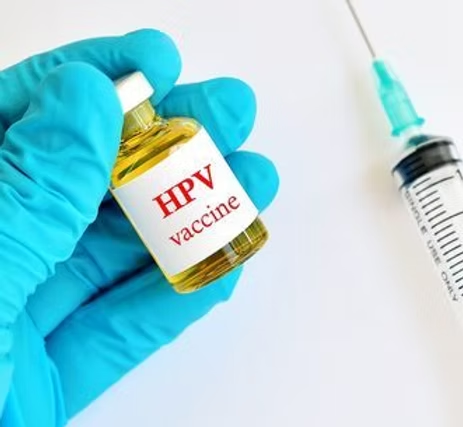
the introduction of the HPV Vaccination Program in 2007, aimed at preventing some types of HPV infection which cause 75% of cancer of the cervix.